ANALYSIS
I'm currently working on more breakdowns to be added!
I play games and analyse them, anything that brings me interest, everything from game design and specific mechanics to level design. For my own education.
A WAY OUT
CONSTRUCTION SITE CHASE SEGMENT
I choose to breakdown this specific segment because it stood out to me when I played it. I just love how the developers chose to make the chase so thrillfull and interesting in a split-screen scenario. Like no other split-screen chase scene I've seen, especially at the time the title was released.
INTRO
We start the this mission entering the construction site, acting as inspection. We can then roam around until we find the elevator, were we then are introduced to the target.
START OF CHASE
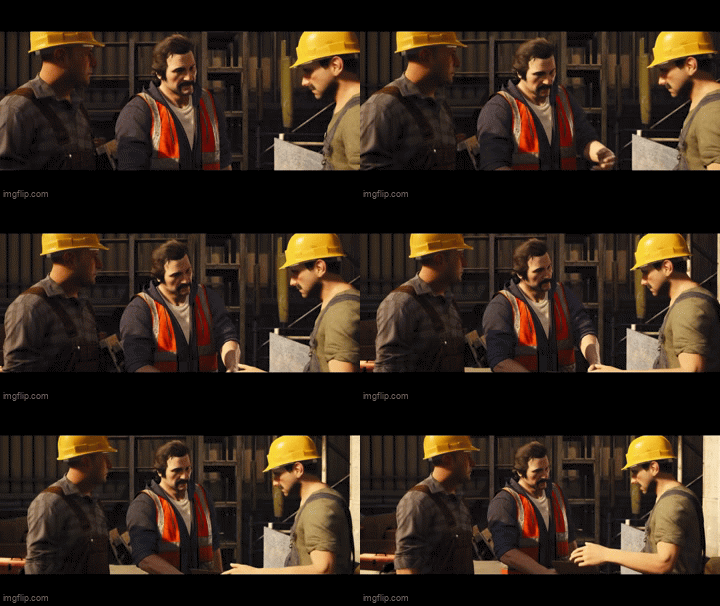
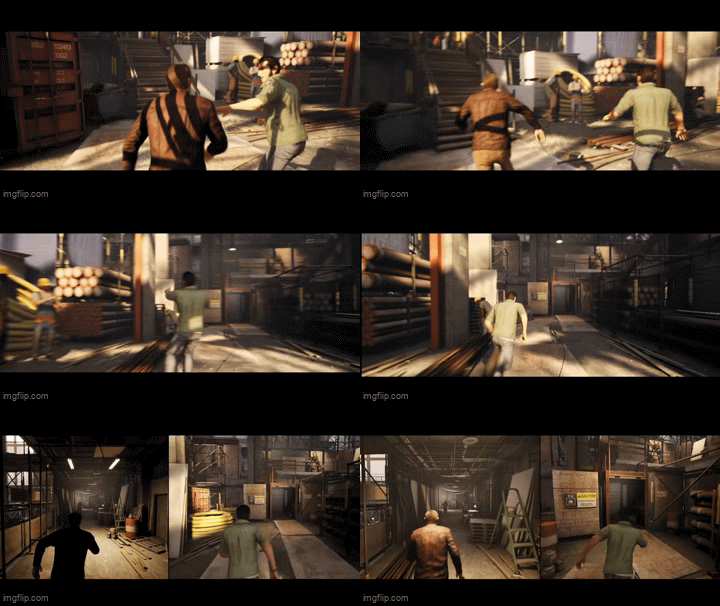
"Take the stairs, I'll go this way" Leo says. Insinuating they should split apart - leading into a smooth split-screen transition

THE DESIGN QUESTION IT'S SOLVING
In a single player chase, tension comes from the players own proximity to failure. In co-op, that is harder, if only one player is doing the chasing, the other is just watching, which kills engagement instantly, OR, it's very linear, both run forward and try to catch up or run from a target. The real problem A Way Out is solving here is: how do you make a chase sequence where both players feel like the active threat, not one player and one spectator?
HOW THEY SUCCEED WITH THIS
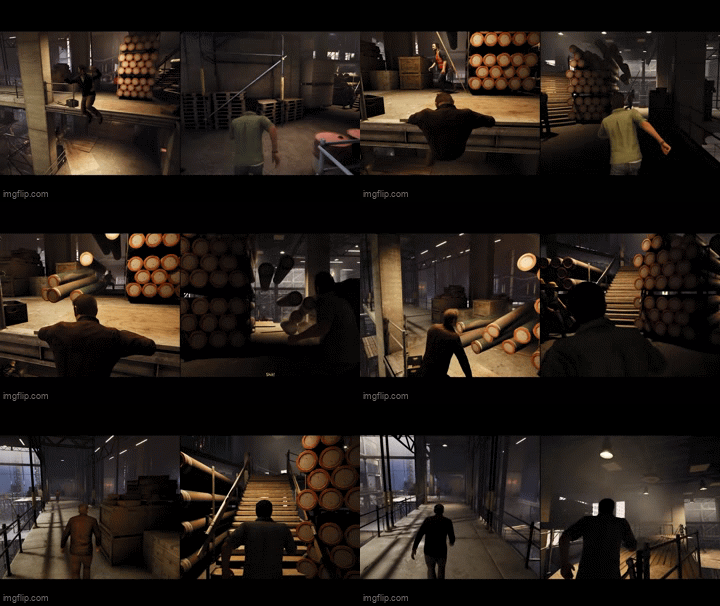
Focus is always shifting from player to player. When one player gets close to the target, the target disrupts their momentum with an obstacle or something that makes them have to switch path,
at this point - the other player has full momentum and we can now visibly see this player getting closer to the target. This goes back and forth throughout the chase.
MECHANICS
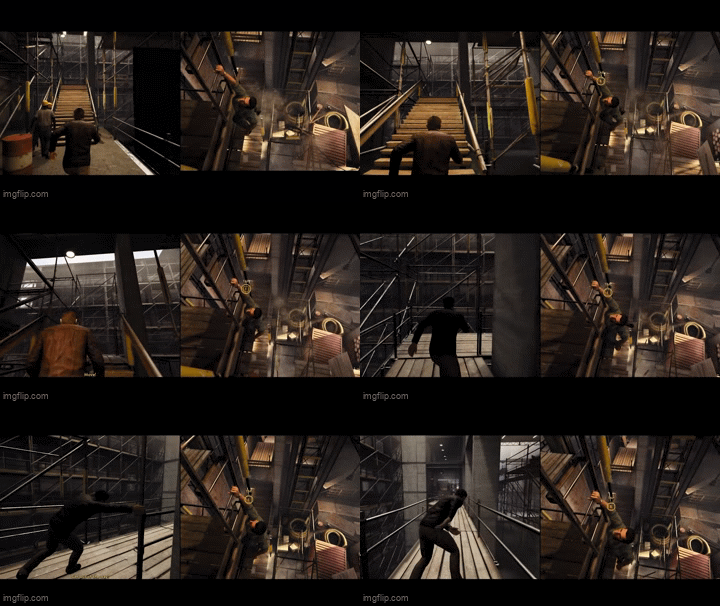
Why QTE's instead of just running and jumping? Because a chase built on movement would rely on skill, this isn't a skill based chase, it's a calculated cinematic one - it's about maintaining tention while control switches between players. IMO - this is the greatest design choice they could've made, even though QTE's isn't always the most fun.
FINAL THOUGHTS
This isn't the common approach to a split-screen chase. Building two separate, parallel paths that reconverge at scripted moments is expensive, my guess is that's exactly why so few games attempt it.
Most co-op chases just run both players down the same corridor.
QTEs get a bad reputation, and honestly I usually agree with that criticism. But here I think it was the right call. The chase isn't about testing reflexes, it's about tension and momentum trading between two players. QTEs hand pacing control to the designers instead of the players skill, which is exactly what a moment like this needs.
The real limitation is replayability. There's essentially one path to success, and everything is scripted to hit at the same moment every time. Once you know the pattern, some of the tension is gone. But I think that's a fair tradeoff for a sequence this tightly crafted, they clearly understood exactly what they wanted this moment to do, and nailed it.